Ringing the Bell: Recognizing the Youth Section Call
Formal Youth Section coworkers Rose Nekvapil, Kathleen Morse sit down with Katrina Hoven to discuss the upcoming summer gathering for coworkers from the early 2000s, during the days of Section leader Elizabeth Wirsching. The conversation covers inspiration, memories, and life questions (as a young person and in middle age).
Watch the interview HERE
Katrina:
Hello, could you both introduce yourselves and just share a little bit about what your connection has been to the Youth Section?
Rose:
I'm Rose. It's great to be here. It feels like such a long time ago that I was at the Youth Section. I was invited by Elizabeth Wirsching, who was the head of the Youth Section at the time.
I remember we used to drink a lot of coffee out the front. Some of these older members would come and visit, and they would tell us that they used to be in the Youth Section. I remember not believing them because they were so old. And now I feel like I'm one of those people…now I’m an elder!
Kathleen:
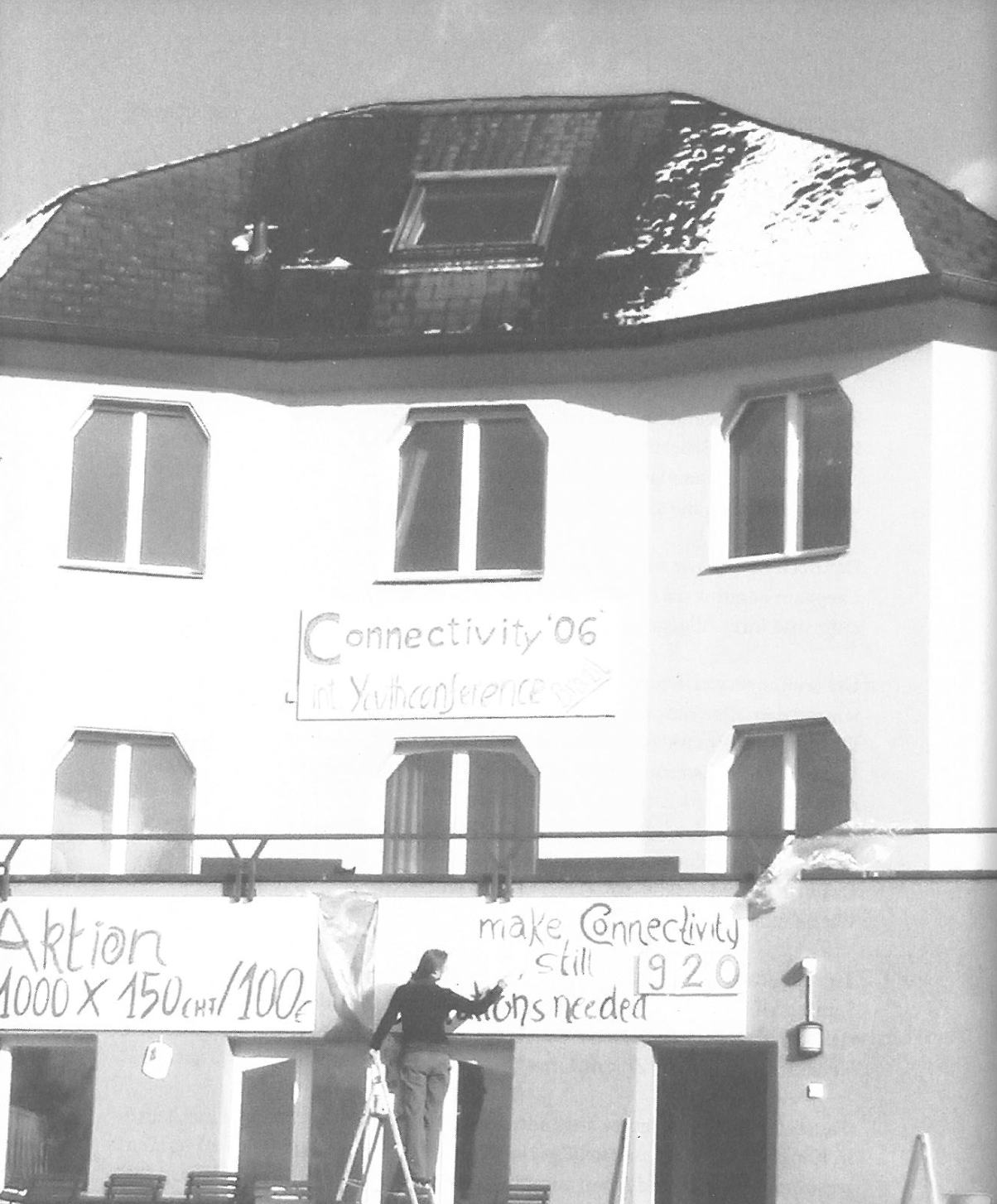
I'm Kathleen, and I was a part of the International Youth Section. I first met the Youth Section in Brazil at Connectivity in…the summer of 2006, 20 years ago. It was influential in my life and in forming the relationships that I built. It's incredible now, 20 plus years later, to still have these connections but in a totally new way… Like Rose said, we're not young anymore!
Katrina:
And what's happening this summer in Sweden? Who's coming? How did it come to be?
Rose:
The idea is that Elizabeth was the Youth Section leader from 2000 to 2011, I think. During her time, there was such a strong international network of young people. We had a meeting every single year called the Initiative Meeting. Young people from all over the world would come who were working with different projects and initiatives and Youth Sections. Elizabeth retired and moved back to Norway and has done many things in Norway since then, [but] I think for her, it just didn't feel complete. There was a feeling that this strong network that had been created still has something to do with each other. And it's a very interesting thing: we're all in our late 30s, 40s and 50s. That's just a different time of life.
For me personally, the reason why I took it up and made a determined effort to make it happen was for Elizabeth. She just did so much for me in welcoming me into the network and the community and Dornach and the Youth Section building. She really was pivotal in my life at that time. And I met so many of my closest friends in the world in that network.
Katrina:
What is that connection about—that you formed with people from your Youth Section group at your age—that sort of continues onward? You both touched a little bit on this point of being connected but looking different now, what is that about?
Kathleen:
That's a very good question. It's very interesting because for me personally, for a while, I wasn't so connected. I was very, very connected to these people around the world…These are poignant moments, really important times that we were connected. [These moments] happened on almost every continent except Antarctica with people at that time.
Now it's coming back—the themes from that time in my personal life, in the world, in questions about existence coming back in a way that kind of got put to sleep for a very long time.
These themes from before are circling back and rekindling these connections in a very intentional way. We're not just like, “Oh, I'll meet you at Walk Your Talk in Israel and Palestine” or “Remember the time of Connectivity.” …Those kinds of things aren't happening anymore. So, it's [now become] very intentional. Like, “I want to connect with you.”
Katrina:
I hear almost like a need for more intentionality and sort of like a greater level of needing to conscientiously commit to those relationships but it continuing to feel important.
Rose:
I'm doing the registrations, and I'm seeing who's coming, and that’s a long period between 2000 and 2011... So, a lot of the people who are coming; I don’t know. I know that we have a particular kind of conversation to have together because we were all…had those similar developmental questions and worked on similar projects.
Kathleen:
Yeah, we're all tied together through Elizabeth and what she was calling, even though we don't maybe know yet that we're tied together.
Katrina:
How would you characterize the focus of the Youth Section during that time, and what was the signature she brought? What gave you this experience of being all together under this collective umbrella?
Kathleen:
I didn't know that that was unique to Elizabeth. I just thought that was Youth Section. As time went on, I saw this is Elizabeth's particular intention, and what she chose to grow and build in the Youth Section.
Rose:
There were so many projects! When you came together for the Initiative Meeting once a year, you really heard about projects, and you met the people who were working on the conference in Israel Palestine and the magazine project, Zeitung. The first initiative meeting I went to was the first meeting about the Youth Initiative Program which turned out to be YIP, and that was formed during one of those meetings…[Elisabeth] was really good at seeing what you were good at and giving you the kind of capacity and the space and what you needed in order to make that happen. I haven't followed the Youth Section since my time, so I don't know what the differences are, but I just really know that it was very action-orientated and international relationships were important. Elizabeth came to Australia to visit us, and she came to New Zealand to visit them, and everyone felt important, and everyone felt a part of it. And if you had a drive to do something and get involved, then Elizabeth really supported that happening.
Now it feels like we're coming out of a kind of U-shape in terms of just focusing on our own things, and it could be quite exciting to see what action could be taken by people in their later years who had all of those skills that Elizabeth nurtured back then.
Kathleen:
Elizabeth literally had an image of standing on top of the Goetheanum ringing a bell and wondering, “Who will answer this call?”
Katrina:
What a metaphor to have to accompany this work that she brought!
Thematically, what remains present, and what was a specific challenge to this time between 2000 and 2011?
Kathleen:
I feel personally that the youth of today have it harder than we did. I don't know if that's just like every generation as they get older, looks back and like wow, that's a lot to take on. But the world is very tumultuous now in a way that it wasn't so visibly tumultuous when we were young. I think young people are being confronted with things in the world earlier and earlier…in the high schoolers there is this apathy…because they don't know how to meet the world because there’s so much that is so intense in a way that our generation, when we were young, that kind of apathy, I don't remember.
I think the questions of this generation really are about having human connection. Like, just for an example, the juniors and seniors were in fifth and sixth grade when COVID hit and everything was digital, right? Every single human connection besides their family was digital. Intentionally. And yet they want so desperately to have those human connections…but they need the adults to help them to get there even though they want it…And so what does it look like to have that in-person connection to a human being kind of cut off for a while in your growth and development and then being pushed and pushed by social media with AI of what is true and what is not in the human world…I think it's a really interesting time to be alive and to be a young person right now. And there's a lot of things to wrestle with, and there's a lot of incredible potential to grasp on to and to carry forward.
Rose:
It's going to be interesting to re-meet as well in terms of our relationship to anthroposophy. Some of us have been deeply involved with anthroposophy the whole time since the Youth Section and others, you know, I'm sitting here listening to Kathleen—to this conversation, and I'm thinking, “Well, I haven't been having these kinds of conversations really since I left YIP.” Because they don't exist in the world…when you're not involved in a spiritual community. When I'm around my Youth Section friends, we end up having these kinds of conversations. But generally, in my life, I don't think about these things so deeply…
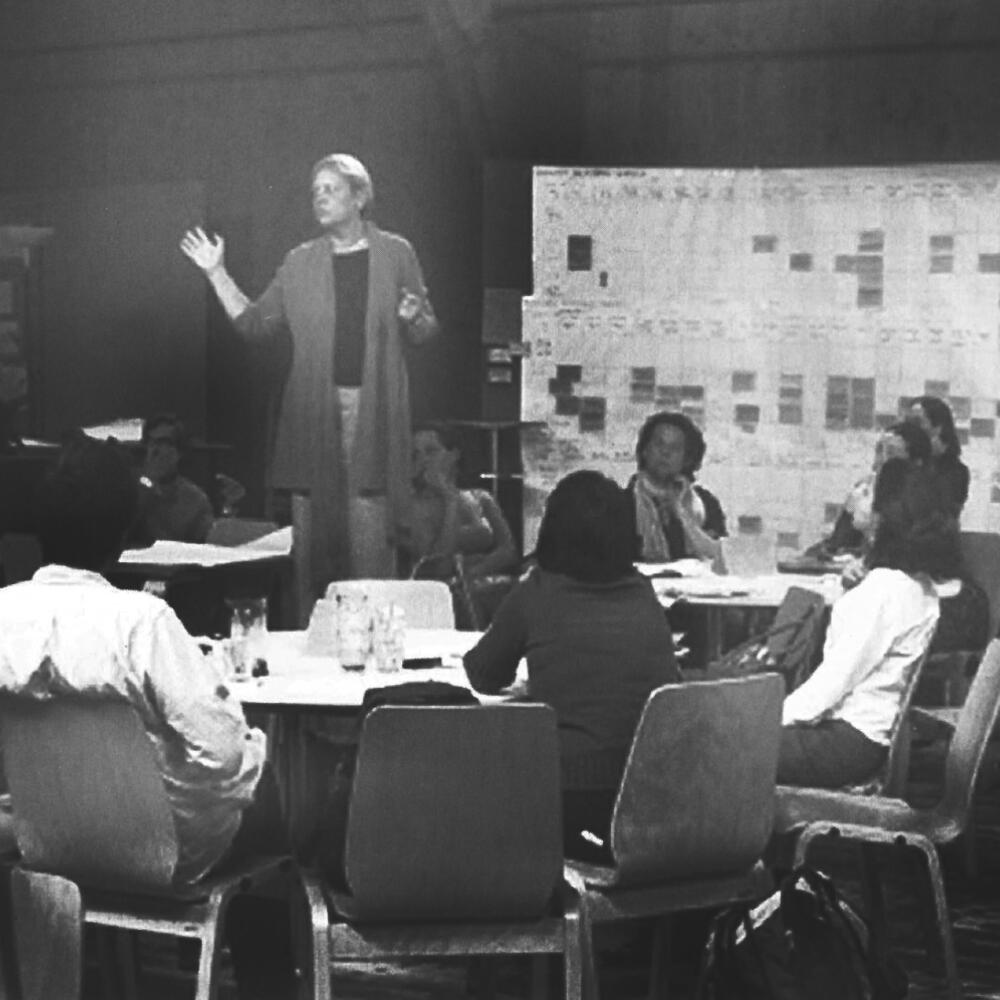
[During the gathering] Elizabeth is going to bring some pictures and images from the First Class Lessons for us…I think there's going to be a deep reconnection to the kind of spiritual conversation we were having…There is an intention that we all take something from this reunion, and it's up to each one of us to know what that's going to be, but that the groundwork of the reunion will move something in us and will take something from it.
Kathleen:
It's like the Youth Section lives with us and lives on in us, whether we were conscious of it or not. It seems like we're getting to a point as a network that we're waking up and being like, oh yeah, those questions are coming back to me in a totally new, but very similar way. I don't know if that's a universal biographical experience…But these questions have always been with us, and they're coming back in a new way that we can work with. I look back at my 27-year-old self, and I didn't even know there was another way to work with these. I couldn't even conceptualize that I would be 47 and working on these questions again. I was like “these are questions of youth. Nobody older understands.” [laughs]…Like I actually literally said that to someone in their forties…these questions actually do return to you in different ways through life.
Katrina:
I think there's this element also that I experience as being so characteristic of youth work where this encounter that the self has to go through in the world of “Who am I? What am I seeing? And what do I learn through experience?” Spirituality, that's really grounded in experience, I think is such a nice way to characterize this sort of…youth spiritual experience.
Kathleen:
I can see how older people want to kind of control that experience for young people and say like, “Oh, I know I'm going to tell you, but that's not the point of life and existence.” Young people will bring something with them that I don't understand and that they teach me…and it takes people (I'm going to say older people) to step aside and give that space...It's also the stepping aside to say, “Hey, what are you bringing into this world that is new? And I can't bring that into the world, but I can give you the space and the support to bring that. Because the world needs you now!”
Katrina:
Beautiful! Along those lines, I'm wondering if you have any words of wisdom or maybe also wishes for your younger, next generation Youth Section colleagues that are out there and active today in the world?
Rose:
It matters what you do. It matters what you do. Thinking and feeling things is so complicated and so difficult and so hard. And if you can move through those things into doing something, whether it's something for yourself, whether it's something for someone else, bringing something new into the world is such a powerful thing.
I remember the very first time I realized that I'd taken initiative was. I was at home, and I really wanted ice cream. And I called up my friends, and they met me at the ice cream shop. And we sat around eating ice cream. And it was then that I was aware of the fact that I had made that happen. It was my idea, and I had made it happen, and then we were there enjoying ice cream. And it can be as simple as that! It doesn't have to be some big, enormous project, it can just be something small that you bring new into the world.
Kathleen:
It also matters who you choose to be, how you choose to interact in this world. You are the one who chooses how you interact with the person checking you out at the grocery, or with someone you walk by at the park or a friend that you have, and what conversations you choose to have, and how you take that into the world…That formation of, “Who do I choose to be today? And what do I choose to do in the world?” today are essential in developing the person that you want to be.
Katrina:
Thank you! I'm just wondering if you have one or two especially poignant, maybe even funny, memories to share from your time in the Youth Section.
Rose:
I have a beautiful one. I came in one morning when I'd first come to the Youth Section and this gorgeous woman was making muesli and wanted me to take over making the muesli. And I said to her, “How many raisons should I put in?” And she said, “Just put in as much as it makes it beautiful.” And I said, “How many almonds should I put in?” And she said, “Just make it beautiful. Whatever. Just put everything in just to make it beautiful.”
And it was such an expression of like how the whole place was running. And just this characteristic of it doesn't matter. Just what matters is that it's beautiful, and then it will taste good.
Kathleen:
That’s awesome! The story (I don't know if this is the most poignant), but the story that pops in my mind is I was getting picked up at the airport with someone…I talked on the phone with this person but never met them or seen a picture or seen them. And I'm waiting at the airport, and this person walks in and I look at them and I'm like, “that's this person.” And this person looks at me and comes over and says my name. We just like locked eyes and like, “Hi, hi, nice to meet you again.” Those kinds of connections were so prevalent, and I didn't realize how that wasn't the entire world. That was so my experience at the time with this network!
Katrina:
Oh, lovely. Thank you both for sharing—memories, experiences, kind of what's remained alive. It feels so potent. I'm so excited that this gathering is happening. Blessings! And I hope it goes really well!